
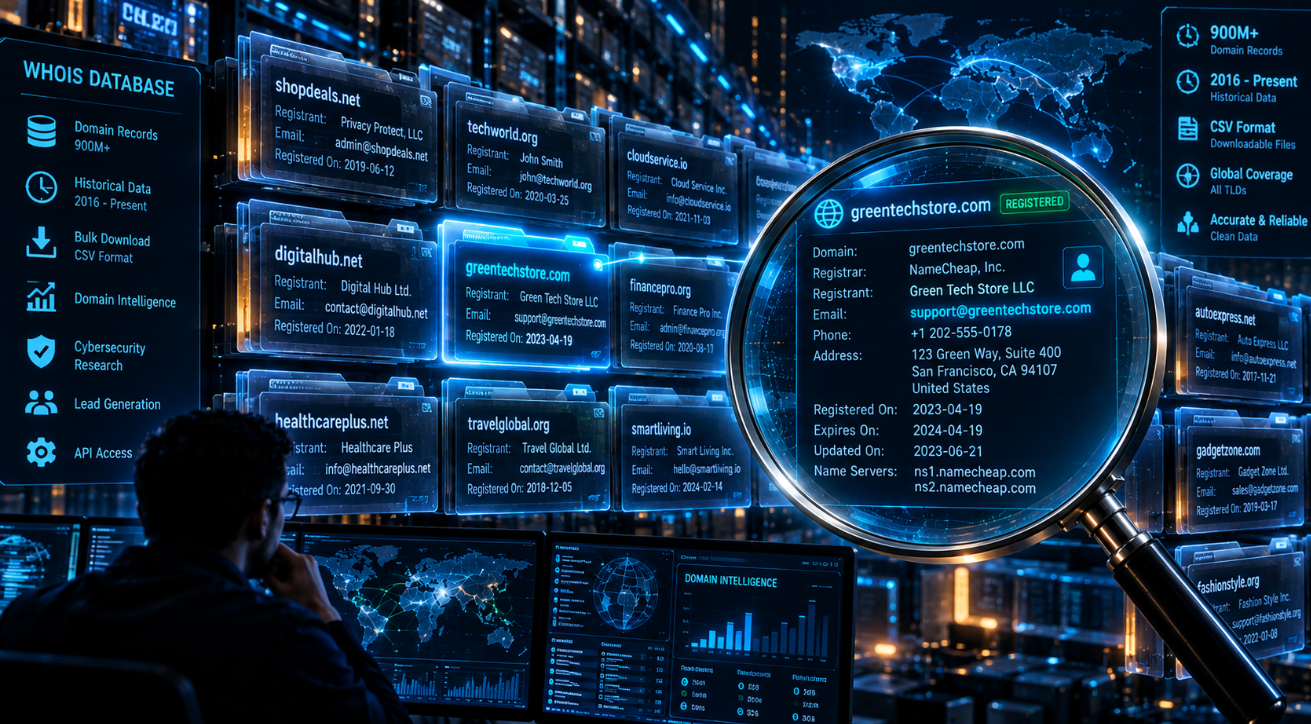
Every domain name on the internet has a registration record. When you visit a website, send an email, or conduct a transaction online, there is a domain behind that activity, and every domain has an owner. The WHOIS database is the system that records and publishes this ownership information. For cybersecurity professionals, understanding WHOIS is not optional, it is foundational to investigating threats, attributing attacks, and mapping adversary infrastructure.
Understanding the WHOIS Database
The WHOIS database is a publicly accessible system that stores registration information for domain names and IP addresses. The term "WHOIS" comes from the question investigators ask when examining a domain: "Who is behind this?" This database is maintained through a distributed system of registrars and registries, all operating under regulations established by the Internet Corporation for Assigned Names and Numbers (ICANN).
When someone registers a domain name, they provide contact information to their chosen registrar. That registrar is required to publish this information through the WHOIS system, making it accessible to anyone who queries it. The database serves multiple purposes: it establishes accountability for domain ownership, provides a channel for resolving disputes, and enables security investigations.
The Structure of WHOIS Records
WHOIS records contain multiple categories of data. The most commonly accessed information includes the domain registration date, expiration date, and the nameservers that handle the domain's traffic. But the real value lies in the ownership details.
Thin WHOIS records contain only basic registrar and nameserver information. Thick WHOIS records include deeper ownership details: registrant name, organization, email address, physical address, and phone number. Historically, .com and .net domains used thin WHOIS models, requiring investigators to query multiple sources for complete data. Other top-level domains maintain thick records at the registry level.
A typical WHOIS record contains administrative contacts, technical contacts, and billing contacts. For most domains, these are the same person. For large organizations, they are separate departments with distinct responsibilities.
How WHOIS Data Is Accessed
The traditional method for querying WHOIS data is through the WHOIS protocol, which operates on port 43. Users issue commands through command-line tools or web interfaces, and the responsible server returns the registration record.
However, the WHOIS protocol has significant limitations. It lacks standardization, produces inconsistent output formats, and does not support internationalization. These shortcomings led the technical community to develop the Registration Data Access Protocol (RDAP) as a modern replacement.
RDAP offers several advantages. It uses RESTful web services, returns structured JSON responses, supports secure HTTPS connections, and provides differentiated access to data based on user authorization. As of January 2025, ICANN designated RDAP as the definitive source for generic top-level domain registration information, effectively sunsetting traditional WHOIS services.
The Role of WHOIS in Cybersecurity
Security professionals rely on WHOIS data for multiple critical functions. The information enables investigators to identify the parties behind malicious domains, detect patterns in domain registration that indicate coordinated attacks, and map infrastructure used by threat actors.
Consider a phishing investigation. A security analyst identifies a suspicious domain mimicking a legitimate brand. Querying WHOIS reveals the registrant email address, registration date, and nameservers. If the domain was registered recently using a disposable email service, these are red flags. But the investigation does not end there. Using reverse WHOIS techniques, the analyst searches for all other domains registered with the same email address. This often reveals an entire network of malicious domains operated by the same actor.
WHOIS data also supports proactive defense. Organizations monitor for newly registered domains that resemble their brand, enabling them to take action before phishing campaigns launch. Security researchers correlate domain registration patterns with known threat actor behaviors, building profiles that predict future activity.
Historical WHOIS: The Forensic Goldmine
Current WHOIS records are frequently redacted due to privacy regulations like GDPR. Registrant details often appear as "REDACTED FOR PRIVACY," limiting their investigative value. This is where historical WHOIS data becomes indispensable.
Historical WHOIS databases preserve records from before privacy protections took effect, maintaining unredacted contact information that reveals true domain ownership. With over 20 billion historical records available from major data providers, investigators can trace domain ownership changes over time, identify previous owners of now-malicious domains, and uncover connections that current records obscure.
The MITRE Corporation recognized the value of this data, developing an interactive pivotable tool called the WhoDat Project in cooperation with WhoisXML API to support researchers and analysts working with WHOIS data.
Challenges and Limitations
WHOIS data has well-documented accuracy issues. Registration information is only as reliable as what registrants provide, and many entries contain false or outdated details. ICANN requests annual updates, but enforcement is inconsistent.
The distributed nature of the WHOIS system also complicates access. Different registrars maintain records in varying formats, and some top-level domains do not provide complete data. Privacy services that register domains on behalf of customers further obscure ownership details.
Despite these limitations, WHOIS remains a valuable forensic tool. Even imperfect data provides investigative leads. Cross-referencing multiple records can reveal patterns that individual entries miss. The historical dimension adds depth that current records alone cannot provide.
Conclusion
The WHOIS database is the internet's registration record system, documenting who owns every domain and how to contact them. For cybersecurity professionals, it is an essential intelligence source for investigating threats, attributing attacks, and mapping adversary infrastructure. While the protocol is evolving, RDAP is replacing traditional WHOIS, the underlying data remains critical.
Understanding WHOIS means understanding the foundation of domain intelligence. When combined with historical records, reverse Whois lookups, and correlation techniques, WHOIS data transforms from simple contact information into powerful evidence for unmasking the actors behind cyber threats.